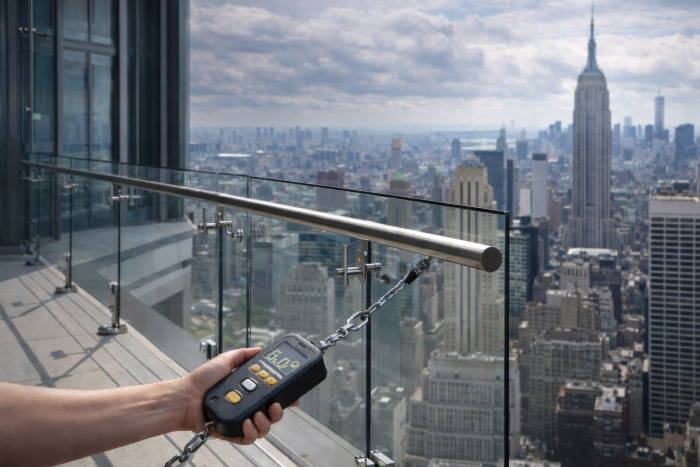
Imagine walking out onto a balcony, maybe thirty feet up, maybe more. And instead of any metal railing or some wood balusters, there’s just glass. Clear. Almost invisible. People usually get nervous when they see that.
We see it all the time on job sites. Homeowners step out, touch the glass, and start asking about how all that holds together. Totally fair reaction.
This is where the engineering brain kicks in. Modern glass railings aren’t decorative panels someone put into place on a whim. In New York they’re engineered safety systems designed to meet strict structural rules. It’s all about glass railing building codes NYC enforces with zero wiggle room.
Amber Glass Corp is a professional NYC glass company, we deal with this intersection of architecture and physics every day. Our job is combining clean modern designs with exceptional durability.
The Science of Strength: Tempered vs. Laminated Glass
No legitimate contractors are installing balcony railings made from regular window glass. That would be a catastrophic decision to make. Standard annealed glass breaks easily and produces long shards. Building codes flat out prohibit using it for railings, balconies, or stair guards. Instead, structural railing systems use tempered glass, laminated glass, or both together.
Tempered glass goes through a heat treatment process where the panel is heated to extremely high temperatures and then rapidly cooled. That compresses the outer surface layers and changes the internal stress structure of the glass. The result is glass that’s roughly four to five times stronger than regular glass of the same thickness.
If it breaks it shatters into small rounded fragments instead of knives. Much safer. Dice, not daggers.
Laminated glass is a whole different level of safety engineering. It consists of two glass panels bonded together with a plastic interlayer, usually PVB. And that PVB layer is doing a lot of work.
If the laminated glass cracks, the plastic layer holds the fragments. The panel might spiderweb visually, sure, but it doesn’t fall apart. That’s why you see laminated systems in windshields, skyscraper glazing, and high-security architectural designs.
Many homeowners on Reddit’s ask if glass railings can withstand impact. The answer lies in the PVB interlayer found in laminated glass, which holds the panel together even if shattered.
The obvious facts bring us to the common design decision: tempered vs laminated glass for balconies. In most professional installations, we actually combine them. Tempered laminated glass. Strength plus reliability. It’s kind of the gold standard.
NYC Building Codes and Residential Requirements
Now let’s talk about rules. New York City does not play around when it comes to structural safety.
The glass railing building codes NYC requires follow both the International Building Code and local amendments. Be it glass, steel, wood, whatever — every railing system has to meet these standards before inspectors sign off.
Most residential guardrails must be between 36 and 42 inches high. If you want clear sightlines you have to stick to that range.. Especially important for terraces and rooftop spaces where people want the view, not a visual wall.
In many installations, glass panels must include a top rail. The rail distributes loads across the system and gives users something to grab for stability. This is where engineering calculations come into play: certain systems using thicker structural laminated glass can eliminate the top rail entirely.
You’ll see those all-glass balcony designs in high-end projects. Impressive and minimalistic. Carefully engineered. Whether we’re installing glass railings in Brooklyn brownstones or full-height balcony systems on Manhattan high-rises, each panel is produced to meet local code requirements and structural calculations.
No guesswork involved.
Load Capacity: How Much Force Can a Glass Railing Take?
“Alright, but how strong is it really?” A fair question we hear from our clients every week. The answer lives in something engineers call structural glass railing load capacity. Every railing system must pass specific force tests defined by building codes.
| Type of Load | Requirement (IBC/NYC Code) |
Purpose |
| Uniform load | 50 lbs per linear foot | Ensures the railing can support a group leaning on it |
| Concentrated load | 200 lbs applied at any point | Protects against a single strong impact at the top edge |
| Safety factor | 4:1 ratio | Engineering margin ensuring performance under extreme stress |
Let’s translate that a little. If several adults lean against the railing at once that’s considered a uniform load. The system must handle continuous pressure across the entire length.
Then there’s the concentrated load scenario. Someone slips, bumps the railing, or falls against it with force. The railing still has to hold.
And the 4:1 safety factor means the system is engineered to withstand four times the expected load before reaching failure. That’s a big margin.
Properly engineered glass systems have impressive structural glass railing load capacity. They’re not fragile. They’re engineered.
Maintenance and Longevity in Urban Environments
Now, glass itself is surprisingly durable. Though the real challenge in New York is the environment.
If you’re near the waterfront you’ve got salt air drifting in from the harbor. Brooklyn, Queens, parts of Staten Island. Salt loves attacking metal components, making them vulnerable to oxygen. Rust is a sign of trouble.
Then there’s the classic NYC atmosphere: dust, rain, heat, snow, pollution particles settling onto surfaces. That’s why high-quality installations rely on marine-grade stainless steel hardware designed to resist corrosion.
If you want to see how that hardware works in practice, check out our specialized glass railing installation services where we break down the finishes and mounting systems used for urban durability.
Maintenance, thankfully, is pretty simple:
- Clean glass panels periodically with non-abrasive cleaner
- Inspect hardware once a year
- Tighten anchors if necessary
Do that, and your railing system can last decades.
Common Installation Mistakes to Avoid
Now here’s the part many people don’t even think about. Most glass failures don’t happen because the glass was weak. They happen because someone installed it wrong.
Glass is extremely strong across its surface, but the edges are sensitive. If mounting brackets or base channels are misaligned, the glass edge can experience uneven pressure.
That stress builds over time. Eventually the glass cracks. Industry organizations like the National Glass Association emphasize maintaining proper edge clearance between glass panels and metal hardware for this exact reason.
You might also have heard stories about glass panels suddenly shattering. That’s usually connected to something called nickel sulfide inclusions. Those are tiny impurities that can form during the manufacturing process. Heat-soak testing dramatically reduces the risk, but again, proper installation matters. Alignment, spacing, hardware tension—all of it affects long-term performance. Which circles back to the big takeaway. Engineering matters. Installation matters no less.
Conclusion: Engineering Makes the Difference
Are glass railings safe? They are. When built properly, a modern glass balustrade safety system combines advanced materials, precise engineering, and strict code compliance. The result is a barrier that’s strong, durable, and visually almost invisible.
The magic is simple:
- Correct glass type
- Proper hardware system
- Professional installation meeting glass railing building codes NYC requires
Get those three right, and the system performs flawlessly.
If you’re planning a balcony upgrade, terrace renovation, or staircase remodel, working with experienced professionals makes a huge difference. From our headquarters in Brooklyn, Amber Glass Corp proudly serves residential and commercial clients throughout the Tri-State area.
Thinking about installing glass railings? Request a structural glass consultation today, and we’ll help you design something safe, elegant, and built to last.